Crested Gecko Care Sheet
Origin:
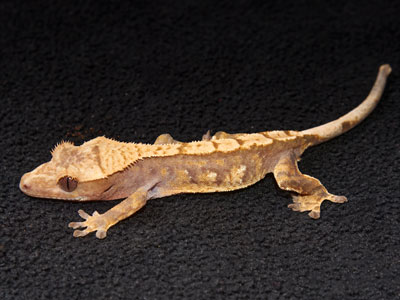
Crested geckos (Correlophus ciliatus) are native to the southern coastal forests of New Caledonia. They inhabit tropical rainforest environments and are arboreal, often found in trees and shrubs.
Description:
Crested geckos are medium-sized, nocturnal lizards with distinctive fringed crests running from their eyes to the tail. Adults typically measure 7–10 inches including the tail and weigh 30–60 grams. They can live 15–20 years in captivity with proper care.
Temperament:
Crested geckos are generally calm, docile, and tolerate gentle handling, especially when introduced gradually. They are arboreal and primarily active at night, making them low-maintenance for observation.
Feeding:
- Staple diet: Commercial crested gecko powdered diets mixed with water to a pudding-like consistency.
- Insects: Occasional small crickets or roaches 1–2 times per week for adults, more for juveniles.
- Fruits: Soft fruits such as mango, papaya, or banana may be offered occasionally.
- Supplements: Calcium with vitamin D3 2–3 times per week; multivitamins once per week.
- Water: Fresh water available in a shallow dish or via misting for drinking droplets.
Housing:
- Enclosure: Vertical glass or plastic terrarium for climbing; secure screen top for ventilation.
- Size: Minimum 18"x18"x24" for one adult; taller enclosures preferred.
- Substrate: Coconut fiber, soil, or paper towel; keep humidity 50–70%.
- Climbing and hiding: Provide branches, cork bark, plants, and hides.
- Temperature: 72–78°F during the day; nighttime 65–75°F. Avoid temperatures above 82°F.
- Lighting: Low-level UVB optional; provide day/night cycle.
Handling:
Handle gently using cupped hands. Allow the gecko to climb onto your hand rather than grabbing. Frequent short handling sessions encourage trust.
Health:
Common health issues include:
- Metabolic bone disease from calcium or vitamin D3 deficiency
- Dehydration due to inadequate humidity or water access
- Impaction from ingesting substrate or oversized prey
- Shedding problems if humidity is too low
Regular veterinary care with a reptile specialist is recommended. Monitor for lethargy, weight loss, or abnormal behavior.
Grooming:
Crested geckos groom themselves and shed their skin periodically. Provide humidity and smooth surfaces to aid shedding. Baths are rarely needed.
Fun Facts:
- Crested geckos can drop their tail as a defense mechanism; unlike some lizards, the tail does not regenerate.
- They are nocturnal and mostly active at night.
- Crested geckos communicate with tail movements, vocalizations, and body posture.
- They can recognize their owners and may climb onto hands or arms voluntarily.
Compliments of:
S & S Exotic Animals, Inc.
1711 Connorvale Rd., Houston, TX 77039
(281) 590-0426
www.sandsexoticanimals.com