Leopard Gecko Care Sheet
Origin:
Leopard geckos (Eublepharis macularius) are native to arid regions of Afghanistan, Pakistan, India, and Iran. They inhabit rocky deserts and grasslands, hiding in crevices and burrows to escape extreme temperatures.
Description:
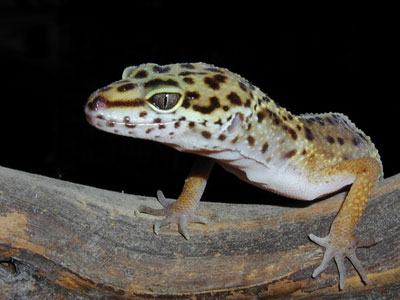
Leopard geckos are small, nocturnal lizards with distinctive spotted patterns and eyelids, unlike many other geckos. Adults typically reach 7–10 inches in length and weigh 40–65 grams. Lifespan in captivity ranges from 10–20 years with proper care.
Temperament:
Leopard geckos are docile, slow-moving, and handleable reptiles, making them excellent beginner pets. They are generally solitary and prefer nighttime activity.
Feeding:
- Staple diet: Live insects such as crickets, mealworms, dubia roaches, and occasionally waxworms.
- Supplements: Dust insects with calcium and vitamin D3 2–3 times per week; multivitamins once per week.
- Feeding frequency: Juveniles daily; adults every 2–3 days.
- Water: Fresh, clean water available in a shallow dish at all times.
Housing:
- Enclosure: Glass or plastic terrarium with secure lid; avoid loose mesh tops.
- Size: Minimum 20-gallon long for a single adult; larger for multiple geckos.
- Substrate: Reptile carpet, paper towels, or tile; avoid loose sand for juveniles due to impaction risk.
- Temperature: Basking spot 88–92°F, cool side 75–80°F; nighttime 70–75°F.
- Hides: Provide at least two hides: one warm and one cool, plus a humid hide for shedding.
- Lighting: Not strictly necessary for nocturnal activity, but low UVB can be beneficial.
Handling:
Handle gently using slow, cupped hand movements. Avoid grabbing the tail, as it can detach as a defense mechanism. Start with short handling sessions to build trust.
Health:
Common health issues include:
- Metabolic bone disease from calcium or vitamin D3 deficiency
- Impaction from substrate ingestion
- Respiratory infections from poor ventilation or damp conditions
- Shedding problems due to low humidity or inadequate hides
Regular veterinary checkups with a reptile specialist are recommended. Monitor for lethargy, weight loss, or abnormal behavior.
Grooming:
Leopard geckos groom themselves naturally. Provide a humid hide for proper shedding. Bathing is only needed occasionally to assist with shedding or hydration.
Fun Facts:
- Leopard geckos have movable eyelids, unlike most geckos.
- They can drop their tail as a defense mechanism; the tail will regenerate over time.
- They are nocturnal, hunting insects under cover of darkness.
- Leopard geckos can recognize their owners and often become tame with consistent handling.
Compliments of:
S & S Exotic Animals, Inc.
1711 Connorvale Rd., Houston, TX 77039
(281) 590-0426
www.sandsexoticanimals.com