Milk Snake Care Sheet
Origin:
Milk snakes (Lampropeltis triangulum) are native to North, Central, and South America. They inhabit forests, fields, and agricultural areas, often near rodent populations.
Description:
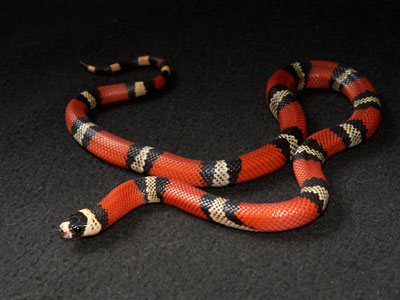
Milk snakes are medium-sized, non-venomous snakes with vibrant color patterns of red, black, and white or yellow bands. Adults typically reach 2–4 feet in length and weigh 1–2 pounds. Lifespan in captivity can reach 15–20 years.
Temperament:
Milk snakes are generally calm, easy to handle, and suitable for beginners. They may occasionally hiss or flatten their heads when stressed but rarely bite aggressively.
Feeding:
- Diet: Appropriately sized rodents (mice or rats), usually pre-killed or frozen/thawed.
- Feeding frequency: Juveniles every 5–7 days; adults every 7–14 days.
- Water: Fresh water provided daily in a shallow dish for drinking and soaking.
- Notes: Avoid handling 24–48 hours after feeding to prevent regurgitation.
Housing:
- Enclosure: Glass or PVC terrarium with secure lid.
- Size: Minimum 20–40 gallons for adults; larger preferred for activity.
- Substrate: Aspen shavings, newspaper, or reptile carpet; avoid cedar and pine.
- Temperature: Basking 85–88°F, ambient 75–80°F; nighttime 70–75°F.
- Humidity: 40–60%; provide a moist hide during shedding.
- Hides: At least two hiding spots on warm and cool sides of the enclosure.
Handling:
Handle gently, supporting the snake’s entire body. Milk snakes are tolerant of handling but may initially be shy. Regular, calm handling encourages tameness.
Health:
Common health issues include:
- Respiratory infections from poor ventilation or low temperatures
- Parasites (mites or internal worms)
- Shedding problems due to low humidity or inadequate hides
- Obesity from overfeeding or improper prey size
Veterinary care with a reptile specialist is recommended. Monitor for lethargy, refusal to eat, abnormal shedding, or wheezing.
Grooming:
Milk snakes shed regularly. Provide a moist hide and proper humidity to assist shedding. Clean the enclosure regularly to prevent scale infections.
Fun Facts:
- Milk snakes are constrictors, subduing prey by coiling around it rather than using venom.
- They are named because of a mistaken belief that they drank milk from cows in barns.
- Milk snakes come in a wide variety of color morphs, making them popular among reptile enthusiasts.
- They are active and curious, often exploring their enclosure and climbing if possible.
Compliments of:
S & S Exotic Animals, Inc.
1711 Connorvale Rd., Houston, TX 77039
(281) 590-0426
www.sandsexoticanimals.com