Pacman Frog Care Sheet
Origin:
Pacman Frogs (Ceratophrys spp.) are native to South America, primarily found in Argentina, Brazil, and surrounding countries. They inhabit humid forests, grasslands, and marshy areas.
Description:
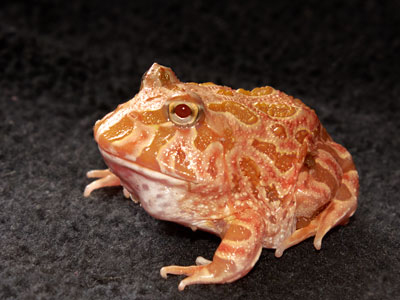
Pacman Frogs are known for their round, flattened bodies and enormous mouths, which they use to ambush prey. They exhibit bright colors and patterns, with shades of green, brown, and orange. Adults reach 4–7 inches in length. They are short-lived compared to some reptiles, with a typical lifespan of 5–10 years in captivity.
Temperament:
Pacman Frogs are sedentary and ambush predators. They are generally docile but can bite if provoked. They do not require social interaction and are best housed alone to prevent aggression.
Feeding:
- Diet type: Carnivorous, primarily insectivorous.
- Main diet: Crickets, mealworms, earthworms, and other appropriately sized insects.
- Occasional treats: Pinky mice or feeder fish for adults (offer sparingly).
- Feeding frequency: Juveniles daily, adults every 2–3 days.
- Supplements: Dust insects with calcium powder 2–3 times weekly and a multivitamin weekly.
- Water: Provide shallow, dechlorinated water for soaking and hydration. Maintain moisture in the substrate for proper skin health.
Housing:
- Enclosure: A 10–20 gallon terrarium is sufficient for a single adult.
- Substrate: Moist coconut coir, sphagnum moss, or a soil mix that retains humidity but drains well.
- Temperature: Maintain 75–85°F during the day with a slight drop at night.
- Humidity: Keep 60–80% humidity with regular misting; monitor with a hygrometer.
- Hiding: Provide shelters or plants to mimic natural cover.
- Lighting: Not strictly necessary; ambient room lighting is sufficient. Provide a 12-hour day/night cycle.
Handling:
Pacman Frogs are not typically handled due to their sedentary nature and sensitivity of skin. Handling can stress them and should be limited to enclosure maintenance.
Health:
Common health issues include:
- Skin infections from overly wet or dirty substrate
- Obesity from overfeeding, especially pinky mice
- Parasites from wild-caught food or substrate
- Respiratory infections from cold or damp environments
Maintain a clean enclosure, proper humidity, and a balanced diet to prevent most health problems. Consult an amphibian veterinarian if symptoms arise.
Grooming:
No grooming is necessary. Ensure the frog’s environment stays clean and substrate is replaced or refreshed regularly.
Fun Facts:
- Named after the video game character “Pac-Man” due to their large mouths and eating habits.
- They are ambush predators, often waiting buried under substrate with only eyes and mouth exposed.
- Pacman Frogs can consume prey as large as themselves.
- They spend most of their life partially buried in moist soil or substrate.
Compliments of:
S & S Exotic Animals, Inc.
1711 Connorvale Rd., Houston, TX 77039
(281) 590-0426
www.sandsexoticanimals.com