Sulcata Tortoise Care Sheet
Origin:
The African Spurred Tortoise (Centrochelys sulcata), commonly called the Sulcata Tortoise, originates from the southern edge of the Sahara Desert in Africa. They are adapted to arid environments with extreme temperatures and sparse vegetation.
Description:
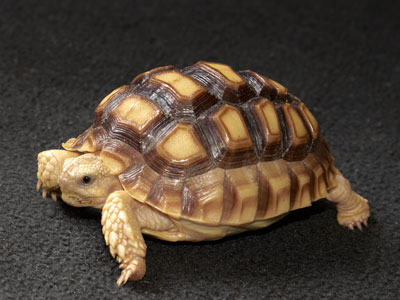
Sulcata Tortoises are one of the largest tortoise species in the world. Adults can reach 24–30 inches in shell length and weigh over 80–100 pounds, with some males exceeding 150 pounds. They have thick, spurred legs and a domed, tan to yellow-brown shell. Lifespan can exceed 70 years in captivity with proper care.
Temperament:
Generally gentle and curious, Sulcata Tortoises can become quite personable. They are strong and can push or dig through barriers, so secure housing is essential. They should not be handled excessively due to their size and weight but can become tame over time.
Feeding:
- Primary diet: High-fiber, low-protein diet of grasses and hays (Bermuda, Timothy, Orchard grass).
- Fresh greens: Dandelion, collard, mustard, and turnip greens, along with hibiscus leaves and flowers.
- Avoid: Fruits, animal protein, and foods high in oxalates (spinach, kale) or phosphorus.
- Calcium: Provide a calcium supplement several times weekly, especially for juveniles.
- Water: Always offer fresh, clean water in a shallow dish; soak young tortoises several times a week.
Housing:
- Outdoor enclosure: Preferred for adults; must be secure, spacious, and escape-proof.
- Indoor setup (for juveniles): Large tortoise table or enclosure with proper lighting and substrate.
- Substrate: Coconut coir, organic soil, or a soil/sand mix; keep slightly moist for juveniles to prevent pyramiding.
- Temperature: Daytime 80–90°F with a basking area of 95–100°F; nighttime can drop to 70°F.
- Lighting: UVB lighting is essential for calcium metabolism and shell health.
- Humidity: Keep humidity around 40–50% for adults; 60–70% for juveniles to support healthy shell growth.
- Hiding spots: Provide shaded areas and shelters where the tortoise can retreat.
Handling:
Handle only when necessary. Support their entire body, and avoid sudden movements that may cause stress. Tortoises prefer stability and consistent environments rather than frequent interaction.
Health:
Common health issues include:
- Pyramiding (caused by poor diet or low humidity)
- Respiratory infections (from cold or damp conditions)
- Parasites (internal or external)
- Metabolic bone disease (from lack of UVB or calcium)
Maintain proper temperature, humidity, and diet to prevent most health problems. Annual checkups with a reptile veterinarian are recommended.
Grooming:
Sulcata Tortoises do not require grooming, but regular shell cleaning with warm water and a soft brush helps remove dirt. Provide periodic soaks to maintain hydration.
Fun Facts:
- Sulcata Tortoises dig burrows up to 30 feet long to escape desert heat.
- They are the third-largest tortoise species in the world, after the Galápagos and Aldabra tortoises.
- “Sulcata” means “furrowed,” referring to the deep grooves on their shells.
- They can live for more than 70 years with proper care and diet.
Compliments of:
S & S Exotic Animals, Inc.
1711 Connorvale Rd., Houston, TX 77039
(281) 590-0426
www.sandsexoticanimals.com